Test Blackout Curtains Against Your Bedroom Before You Pay the Balance
This guide is for a homeowner whose blackout curtains are made or hung but not yet paid off, and who wants to know whether the bedroom will actually go dark before releasing the balance. It covers what to ask about lining construction, where to look for leaks on a hung curtain, how to run your own night-time test, and how to put the result in writing. See also: comparing curtain quotes by finished window rather than by the fabric metre.
Contents
- Will your blackout curtains actually make the bedroom dark?
- Coated blackout or woven triple-weave: which lining construction blocks more light?
- Where does light leak past a hung blackout curtain?
- How do you test a hung blackout curtain before paying the balance?
- Which blackout setup fits your bedroom: lining, track and sheer combinations compared
- Should you layer sheer curtains with blackout, or keep the window single-track?
- Does a leaking blackout curtain justify withholding the final payment?
- Questions homeowners ask about blackout curtains
Key takeaways
- Treat "blackout" as two separate questions.
- There is no approved source record here that compares coated blackout lining with woven triple-weave construction, so this article will not tell you which blocks more light.
- Use this as an inspection route, not as a claim about how every curtain behaves.
- Run the test after installation and before the final payment, with the supplier present or with the results sent to them the same night.
- The table below is a decision aid.
The claims below come from a small set of approved source records, each attributed to its publisher. Everything else is practical advice: things you can measure, photograph and ask your supplier yourself. Where no approved record supports a figure or a rule, this article says so instead of supplying one. If you are still comparing offers, start with comparing curtain quotes by finished window rather than by the fabric metre, so that the test you run later matches what you were quoted for.

Will your blackout curtains actually make the bedroom dark.
Will your blackout curtains actually make the bedroom dark?
Treat “blackout” as two separate questions. First, does light pass through the fabric itself? Second, does light get past the edges of the hung panel: above the track, down the sides, along the hem and through the centre overlap? A label on a swatch answers only the first question, and it answers it for the swatch, not for your window at your hanging height.
None of the approved records available for this article measures how much light a given curtain lining blocks, and none defines a darkness threshold for a bedroom. So there is no percentage here to promise you, and you should be equally sceptical of any percentage a seller quotes without showing you the test behind it. What you can do is define your own acceptance condition before installation and write it into the order.
- Write down what “dark enough” means for you: for example, being able to sleep during daylight hours, or not being able to read a phone screen’s surroundings by stray light. Describe the outcome, not a number you cannot verify.
- Ask the supplier to state in writing which parts of the job they are warranting: the fabric, the lining, the track, the fitting, or the finished result at your window.
- Ask them to demonstrate the same specification on a hung sample or a completed job, at night, with a light source outside the panel, not a swatch held up to a lamp.
- Agree who pays for a return visit if the agreed condition is not met, and how many adjustment visits are included.
Do the demonstration in the room that matters. A bedroom facing a lit courtyard, a street lamp or a neighbour’s balcony presents a different problem from one facing an unlit garden, and the same specification can satisfy one and fail the other.
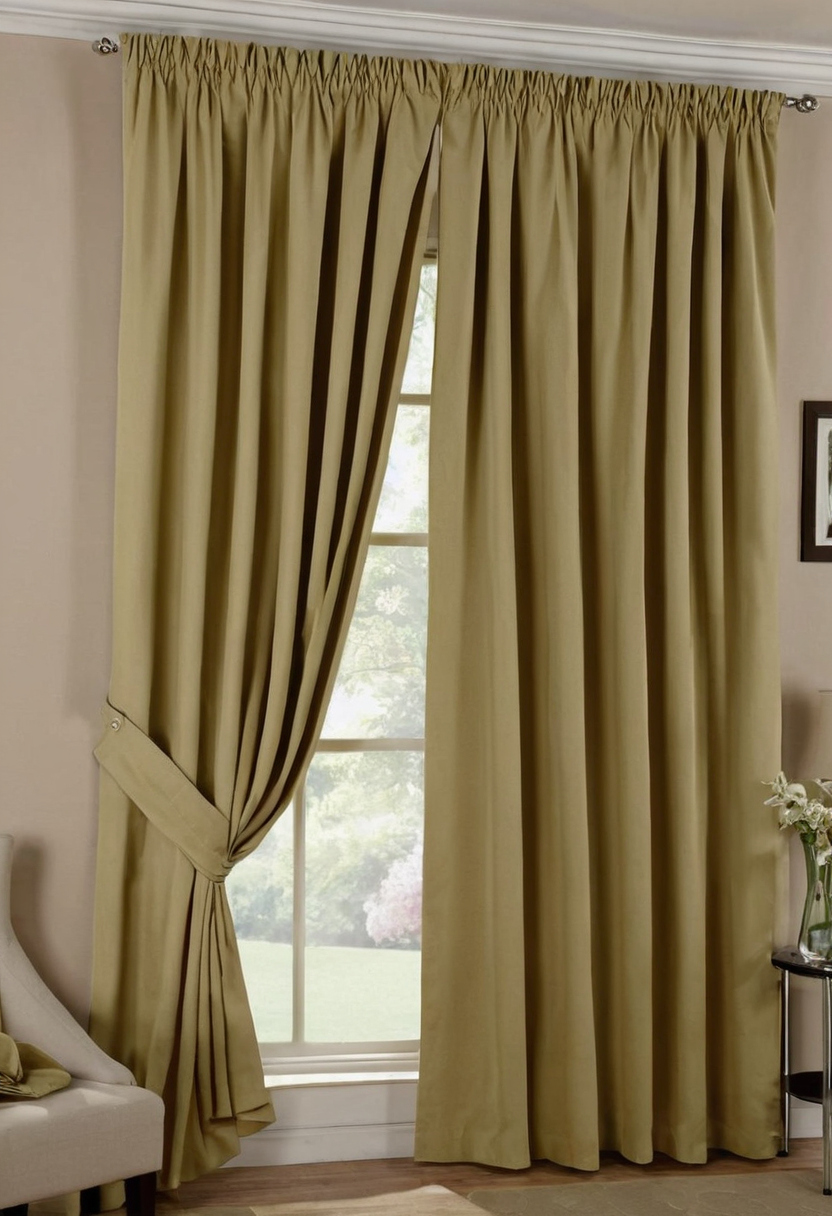
Coated blackout or woven triple-weave: which lining construction blocks more light.
Coated blackout or woven triple-weave: which lining construction blocks more light?
There is no approved source record here that compares coated blackout lining with woven triple-weave construction, so this article will not tell you which blocks more light. Ask for evidence on the specific fabrics being quoted for your room, and compare them under identical conditions.
A practical comparison you can run yourself:
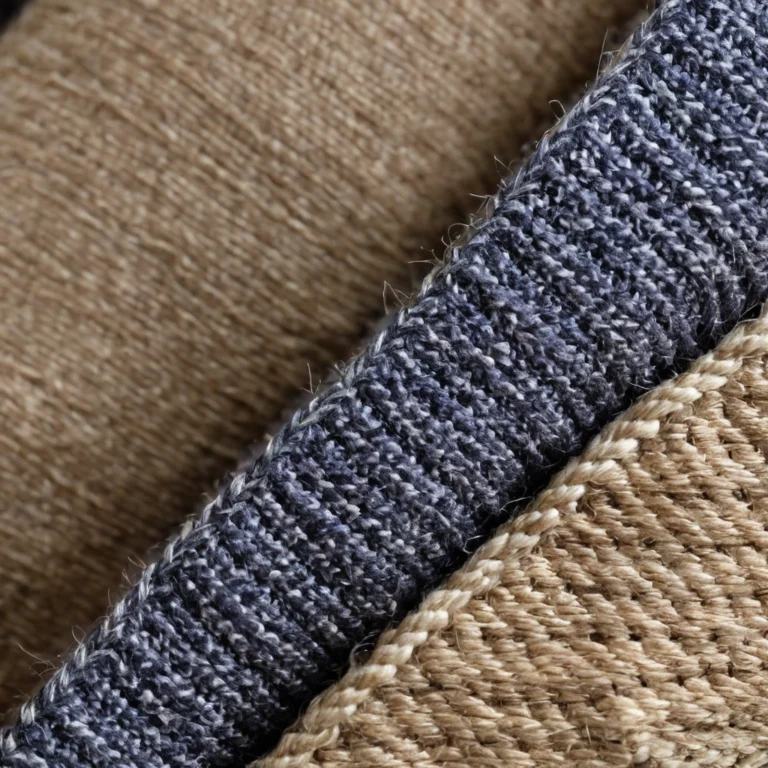
- Request both candidate linings as samples of the size the supplier normally provides, made up the way your curtains will be made: same face fabric, same number of layers, same stitching at the edges.
- Hold each sample against the same light source, at the same distance, in an otherwise dark room, and photograph both with the same phone settings. Keep the photographs.
- Repeat the check with the sample folded double, because seams, hems and heading tape change the build-up of layers at the top of a real panel.
- Ask which construction the supplier is prepared to stand behind for your window, and get that answer next to the price.
Questions worth putting to the supplier in writing: Is the blackout property in the face fabric or in a separate lining? Can the lining be replaced independently later? What cleaning method does the maker specify for this construction, and what happens to the blackout property if it is cleaned differently? How does the maker want the heading finished, and does that finish leave needle holes at the top? Ask for the maker’s own care instructions rather than accepting a general rule of thumb.
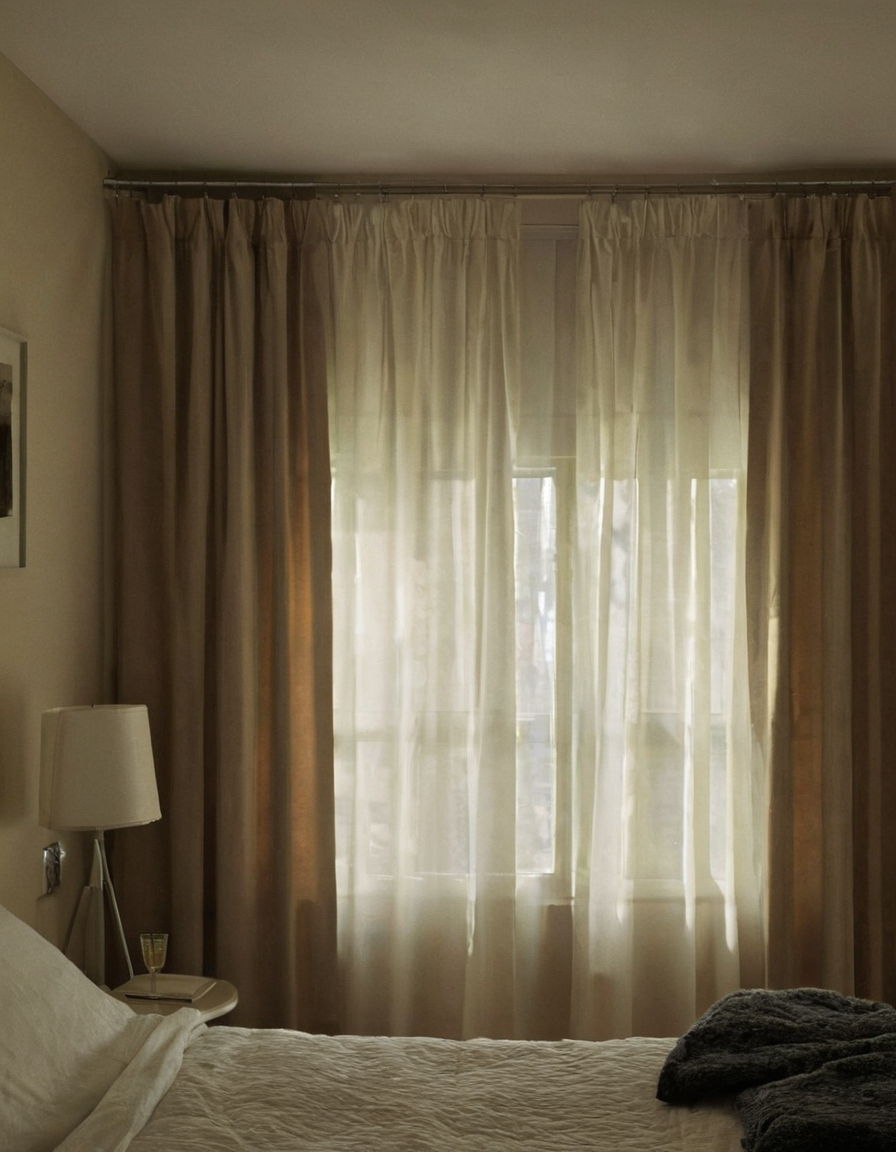
How do you test a hung blackout curtain before paying the balance.
One adjacent point is supported by an approved record. The U.S. Environmental Protection Agency identifies paints, varnishes, waxes, cleaning products, building materials and furnishings as common indoor sources of volatile organic compounds. Curtains are furnishing textiles, so if a new hanging smells strongly, treat that as a question for the supplier rather than something to ignore: ask what finishes or coatings were applied and request the maker’s product information. The U.S. Environmental Protection Agency also recommends increasing ventilation when using products that emit volatile organic compounds indoors; airing the room while new furnishings are off-gassing is consistent with that recommendation. This is not a health assessment of any particular curtain, and no approved record here makes one.
Where does light leak past a hung blackout curtain?
Use this as an inspection route, not as a claim about how every curtain behaves. Walk the perimeter of your own hung panel with the room dark and a bright light outside, and check each of these positions:
- Above the heading. Look at the gap between the top of the panel and the ceiling or pelmet, and at the track or pole itself.
- Down both sides. Check the distance between the panel edge and the wall or window reveal, at top, middle and bottom.
- Along the hem. Crouch to bed height and look up at the bottom edge; the view from a pillow is not the view from standing.
- At the centre. Where two panels meet, check whether they overlap when closed or merely touch, and whether they part when the air conditioning runs.
- Through the fabric. Only after the edges are checked, look for pinholes at seams, at the heading, and anywhere the panel was altered.
- Around the frame. Confirm the glow is coming past the curtain and not through a gap in the window frame, a trickle vent or an unsealed door.
Photograph each leak from the pillow position and again from the doorway, and note the time and which lights outside were on. Those photographs turn “it isn’t dark” into something a supplier can act on.
Then ask targeted questions: can the track be extended or returned further at the sides; can the panels be widened or an extra overlap added at the centre; can a pelmet, side return or bottom seal be fitted; would a different heading close the top gap? Ask what each option costs and whether it is covered by the original quote. Do not accept a fix that has not been priced and dated.
How do you test a hung blackout curtain before paying the balance?
Run the test after installation and before the final payment, with the supplier present or with the results sent to them the same night. A workable sequence:
- Fix the conditions. Choose a night when the external lights you normally face are on. Note the time, the weather, and which lamps or fixtures outside were lit.
- Dark-adapt. Switch off every light inside the bedroom, including standby indicators you can control, and give your eyes several minutes before judging.
- Judge from the bed. Lie in your usual sleeping position and look at the ceiling, the window and the walls. Then repeat from the doorway.
- Photograph consistently. Take the same three shots (bed position, doorway, close-up of each leak) with the flash off and the same exposure settings each time, so a later retest is comparable.
- Walk the checklist from the previous section and mark each position pass or fail.
- Retest after adjustment. Ask for the same conditions to be recreated, and compare the new photographs with the originals side by side.
Two habits make the test persuasive. Record what you asked for in the order (lining, track type, overlap, pelmet, finished dimensions) and check the delivered job against that list item by item. And keep the measurement basis consistent with the quote: if the offer was priced per finished window, verify each finished window separately rather than accepting a single average across the room, as set out in the finished-window approach to comparing curtain quotes.
If your bedroom lighting is also being changed, plan that separately and on its own evidence. ENERGY STAR states that qualified LED lighting uses at least 75 percent less energy and lasts up to 25 times longer than incandescent lighting. That is an energy and longevity claim about qualified LED products; it says nothing about how bright a particular fixture will be in your room, so choose bedroom fittings for the light level you want and dim them for the test.
Which blackout setup fits your bedroom: lining, track and sheer combinations compared
The table below is a decision aid. It lists what to ask and what to verify on your own window. It deliberately contains no ratings, prices or performance figures, because no approved source record here supplies them.
| Setup to discuss | Questions to put to the supplier | What to check on your hung window |
|---|---|---|
| Single track, blackout panel only | Which lining construction is quoted, and is it in the face fabric or separate? What finished width and drop are you making to? | Top gap, side gaps, hem, and whether one panel covers the full reveal. |
| Blackout panel with pelmet or head enclosure | Is the pelmet included in the quote? How does it fix, and can it be removed for cleaning? | Whether the glow above the heading disappears from the pillow position once enclosed. |
| Track with side returns or wider panels | Can the track return to the wall, or can panels be widened? What is the cost and lead time? | Side gaps at top, middle and bottom, measured rather than eyeballed. |
| Two panels with centre overlap | How much overlap is being made, and how is it held closed? | Whether the panels stay closed with the air conditioning running. |
| Double track: sheer plus blackout | Are both tracks, both sets of panels and both fittings in the quoted price? Which layer carries the blackout function? | Each layer alone, then both together, under the same night conditions. |
| Blackout plus a second decorative layer | Does the added layer change the stack-back or block the walkway when open? | Clearance around the bed and doors with everything open and closed. |
Colour deserves its own check. Fabric that looks reassuringly deep in a showroom can read differently under your own lamps, so judge the made-up panel in the room at night before signing off; see how fabric colour reads under evening light. Colour appearance and light blocking are separate observations. Record both, and do not let one stand in for the other.
If anyone in the household uses a wheelchair or a walking aid, agree clearances around the window before the track position is fixed, and ask the designer to show them on the drawing. As an accessibility reference point, the 2010 ADA Standards from the U.S. Department of Justice specify a 30 by 48 inch clear floor or ground space for wheelchair positioning in accessible design, and set accessible dining and work surfaces at 28 to 34 inches above the finish floor or ground. Those are United States accessibility design specifications, not a curtain rule and not a UAE requirement; use them as a dimension to raise with your designer if step-free reach and manoeuvring matter in your bedroom, and confirm what applies to your project locally.
Should you layer sheer curtains with blackout, or keep the window single-track?
Decide this by daytime use, not by habit. Ask yourself what you want the window to do at noon: cut glare on a screen, keep the room usable without exposing it to the opposite building, or simply look finished. Then ask what you want at midnight. If those two answers differ, a second layer is worth pricing; if they are the same, a single track may be all you need.
Put these questions to the supplier before agreeing:
- Does the quote include both tracks, both sets of panels, both headings and the labour for both, or only the blackout layer?
- With both layers drawn, does anything change at the top, sides or centre that could open a new light path?
- When both layers are stacked back, how much of the glass do they cover, and does that matter for your daylight?
- Can the sheer be added later on the same fixing, or does it need a new track and a new drilling pattern?
- What is the cleaning instruction for each layer, and can they be taken down independently?
Test the combination the way you will live with it: sheer alone in the afternoon, blackout alone at night, both together on a bright evening. Photograph all three. No approved record here ranks layered setups against single-track ones, so let your own room decide, and make the supplier price the option you choose rather than the one that is easiest to install.
Does a leaking blackout curtain justify withholding the final payment?
This article gives no legal opinion, and no approved source record here addresses payment disputes, consumer rights or contract remedies in any jurisdiction. Whether you may withhold a balance depends on your own written agreement and on advice from a qualified professional in your jurisdiction. What follows is documentation practice, not a statement of your entitlements.
- Read your agreement first. Find the clauses on completion, snagging, retention and final payment, and note any notice period or deadline for raising defects.
- Separate the two failures. A panel that does not match the specified lining or finished dimensions is a specification issue. A panel that matches the specification but still lets light past the edges may be a design or fitting issue. Say which you are reporting.
- Send evidence, not adjectives. Attach the dated photographs, the checklist with pass/fail marks, the external lighting conditions, and the relevant line of the quote.
- Propose a remedy and a date. Name the adjustment you were offered, ask for it in writing, and ask for a retest under the same conditions afterwards.
- Keep the money conversation factual. State what remains unpaid, what you are waiting for, and by when, and take advice on your position before deciding to withhold.
- Record the retest. Same room, same time of night, same camera settings, same three shots. Sign off only against the condition you wrote down at the start.
If the supplier disputes your test, ask them to specify the conditions under which they consider the job complete, and run the test again under those conditions. A disagreement about method is easier to settle than a disagreement about darkness.
Questions homeowners ask about blackout curtains
These are the questions this guide is built to answer. Where the approved records give no answer, that is stated plainly rather than filled in.
Does a leaking blackout curtain justify withholding the final payment.
Can a supplier promise a percentage of light blocked? Ask what test stands behind the number and whether it was done on the fabric alone or on a hung panel. No approved record available here supplies a light-blocking percentage for any lining, so treat any figure as the supplier’s own claim until they show you the basis.
Is coated lining better than triple-weave? Not answered by the approved records. Compare the two candidate fabrics as made-up samples against the same light source, and ask which one the supplier will warrant on your window.
Why does my room still glow when the fabric looks opaque? Work through the inspection route above: top, sides, hem, centre overlap, seams, then the window frame. Photograph each position from your pillow. That tells you where to aim the remedy.
Do I need a sheer as well? Decide from your daytime requirements and price both layers explicitly. Test sheer alone, blackout alone and both together before signing off.
New curtains smell. What should I do? Ask the supplier what finishes were applied and request the maker’s product information. The U.S. Environmental Protection Agency lists furnishings among common indoor sources of volatile organic compounds and recommends increasing ventilation when using products that emit them indoors. For any health concern, consult a qualified professional; nothing here assesses a specific product.
When should I pay the balance? After the job has been tested against the condition you agreed in writing, and after any adjustment has been retested. Your contractual position is a matter for your agreement and for qualified advice, not for this article.
For more on this topic, see other guides on this site.