
Vendor Management for Interior Fit-Outs: Checks to Make Before Signing a Dubai Contract
Before signing a Dubai fit-out contract or paying a deposit, the client should ask one practical question: has the vendor proved that it can legally perform the work, control the site risk, and return to fix defects after handover? The lowest price is not the first comparison point if the licence, approvals, subcontractors, samples, insurance, and warranty route are still unclear.
Dubai fit-out clients should verify the vendor’s legal authority before discussing price
Dubai clients should first confirm that the interior contractor, joinery supplier, or specialist vendor can legally perform the contracted scope at the project location. Price only matters after the licence, activity, approval route, and signing entity match the actual work.
How should a Dubai client check an interior contractor’s trade licence?
The trade licence check should start with identity, not presentation. A proposal may show a trade name, a showroom brand, or a group logo, but the contract should name the legal entity that will invoice, insure, mobilise labour, and accept defect liability.
- Legal name: match the licence copy, quotation, contract, tax invoice, and bank account beneficiary.
- Trade name or brand: record it, but do not treat it as the contracting party unless it matches the licensed entity.
- Licence number and expiry: verify the licence through the issuing authority’s official channels before paying a deposit.
- Issuing authority: identify whether the vendor is licensed by mainland Dubai authorities or by a free-zone authority.
- Licensed activity: check that the activity covers the work offered, such as interior fit-out, joinery, MEP, gypsum, flooring, glass, metalwork, or fire-rated systems.
- Branch status: confirm whether the vendor’s Dubai branch can contract and operate at the site, especially when the workshop, head office, or parent company sits in another emirate or free zone.
Mainland Dubai vendors should be checked against the licence details issued for the company that signs the contract. Free-zone vendors should be checked through the relevant free-zone authority, because a free-zone registration does not automatically prove that the vendor can perform every activity, in every Dubai location, without further permissions.
The activity wording matters. A joinery manufacturer may be suitable for wardrobes and wall cladding but not for electrical alterations. An interior decoration licence may not cover specialist fire-rated doors, façade glass, gas work, or chilled-water modifications. Where the scope includes regulated specialist work, the client should require the prime contractor to name the licensed subcontractor before signing.
Which authority approval route applies to the fit-out site?
The approval route depends on the site, not only on the design. A villa, apartment tower, office, retail unit, mall shop, hotel area, free-zone premises, or master developer community can trigger different layers of approval from building management, the master developer, Dubai Municipality, Dubai Civil Defence, or a free-zone authority.
Dubai Municipality states that its building permit procedures cover residential villas, industrial buildings, multi-storey buildings, and public buildings under its listed building categories, so clients should check whether the proposed work falls into a Dubai Municipality building permit or completion process for that property type. Dubai Municipality also states that downloadable files submitted in all file formats must be less than 40 MB, which matters when the vendor or consultant prepares drawing packages for that route. Use the official Dubai Municipality Building Permit Procedures page when the site and work fall within that route.
Dubai Development Authority’s fit-out route shows why this check must happen before price comparison. For DDA projects, a Dubai Civil Defense Completion Certificate is required before DDA issues a Fit-Out Completion Certificate. DDA also states that adding structural elements, changing the use, or adding gross floor area requires a Building Modification request rather than a Fit-Out Permit route, and DDA requires NOCs from the main contractor, main consultant, and plot owner if the building has not yet obtained a completion certificate. These conditions appear in the DDA Fit-Out Permit requirements.
The contract-readiness decision is simple: do not sign until the vendor states who prepares drawings, who submits approvals, who pays authority and building-management charges, who responds to comments, and who bears delay risk if the wrong approval route was assumed. Once legal authority is clear, the next risk is whether the contract makes scope, exclusions, and subcontractor responsibility explicit.
The Dubai fit-out contract should make scope, exclusions, and subcontractors explicit
A Dubai interior fit-out contract should define exactly what the main contractor, joinery supplier, designer, consultant, and specialist subcontractors will deliver. This matters where civil works, MEP changes, waterproofing, loose furniture, authority submissions, or imported finishes are involved, because gaps usually appear after mobilisation rather than during tender meetings.
The first diagnostic is the delivery model. In a design-build arrangement, the contractor usually carries both design coordination and construction responsibility. In a contractor-only arrangement, the contractor prices issued drawings and should not carry hidden design risk. With a client-appointed consultant, the contract must say who approves drawings, answers site queries, certifies progress, and signs off variations.
What activities should be included in an interior fit-out scope of work?
A usable scope of work reads like a controlled site sequence, not a mood-board caption. The contract should state what is included, what is excluded, what is provisional, and what the client will supply directly.
- Preliminaries: site survey, mobilisation, protection of lifts and common areas, hoarding, access coordination, permits, waste removal, and final cleaning.
- Removal and preparation: demolition, strip-out, disposal, floor levelling, wall preparation, and repair of damaged substrates.
- Building services: mechanical, electrical, plumbing, drainage, ventilation, lighting controls, fire alarm interfaces, and testing responsibilities.
- Wet areas: waterproofing, screed falls, flood testing, tile installation, sanitaryware fixing, and access panels for maintenance.
- Finishes and fixed work: ceilings, partitions, flooring, wall finishes, doors, ironmongery, glass, mirrors, stone, metalwork, joinery, wardrobes, kitchens, and counters.
- FF&E and equipment: loose furniture, curtains, appliances, decorative lighting, smart-home devices, artwork fixing, and client-supplied items.
- Close-out: testing certificates, operating manuals, as-built drawings, spare keys, maintenance instructions, snagging, and handover cleaning.
Wet-area scope needs extra precision because moisture defects can migrate behind finishes before a client sees a stain. The U.S. Environmental Protection Agency advises that condensation and wet or damp spots should be fixed promptly to prevent mould growth, which supports clear contract wording on waterproofing inspection and defect response for bathrooms, laundries, and damp closets. EPA moisture and mould guidance
Material handover should also match the finish. For natural stone floors, counters, and wall surfaces, the Natural Stone Institute recommends neutral cleaners, stone soap, or mild liquid dishwashing detergent with warm water, so the contractor should provide stone-specific care instructions rather than a generic cleaning note. Natural Stone Institute care guidance
The vendor responsibility matrix should identify who controls each subcontractor
A responsibility matrix prevents the common argument that “the other supplier caused the defect.” The matrix should name the task owner, drawing approver, submission requirement, inspection point, warranty provider, and defect response owner for every specialist package.
For example, the joinery factory may own wardrobes and kitchen carcasses, while the MEP subcontractor owns appliance power, plumbing points, extractor ducting, and testing. The waterproofing applicator may own membrane installation, while the main contractor remains responsible for coordination, protection, and final handover unless the contract says otherwise.
Useful contract wording is plain: “No subcontractor may be appointed, replaced, or assigned without written client approval.” Another clause should state: “The main contractor remains responsible for subcontractor workmanship, programme, safety, protection, and defects, even where the subcontractor has been approved by the client.”
Once scope and responsibility are visible, the next risk becomes clear: two Dubai fit-out quotations can show the same total price while carrying very different exclusions, provisional sums, lead times, and variation exposure.
A Dubai fit-out quotation should be compared as a costed risk document, not just a price
Clients in Dubai should compare interior fit-out quotations by scope completeness, assumptions, exclusions, payment triggers, lead times, and variation rules, not only by headline price. This method works best when two vendors price different brands, material grades, authority fees, provisional sums, or installation standards for the same space.
A low number can hide a missing permit fee, a weak material allowance, or a payment schedule that moves too much cash before the work is proven. Treat each quotation like a marked-up risk map: every blank cell, vague phrase, and “to be confirmed” line should either be priced, clarified, or carried as a client risk.
What should a client ask for in a fit-out RFP before contractors price the work?
A fit-out RFP should give each contractor the same information before pricing. The client should issue drawings, site photos, specifications, a bill of quantities where the work can be measured, building management rules, working hours, access restrictions, approval requirements, target completion date, warranty expectations, and evaluation criteria.
- Drawings and BOQ: include plans, reflected ceiling plans, elevations, joinery details, MEP points, demolition notes, and a measured schedule for flooring, partitions, ceilings, doors, counters, stone, glass, and loose furniture where applicable.
- Site and access rules: state lift booking rules, loading bay limits, night work restrictions, noise windows, protection requirements, waste removal routes, and security pass requirements.
- Authority and building approvals: state who prepares drawings, who submits, who pays fees, and who carries the delay risk if comments are returned.
- Finish and air quality controls: list paint systems, adhesives, sealants, panels, flooring, and ventilation expectations. The U.S. Environmental Protection Agency identifies paints, varnishes, waxes, cleaning products, building materials, and furnishings as common indoor sources of VOCs and recommends increased ventilation during indoor use of VOC-emitting products in that context: EPA guidance on VOCs and indoor air quality.
Dubai Development Authority applications add a further commercial check where the project falls under that route. DDA lists the Fit-Out Permit service delivery time as 2 working days and the fee as AED 0.90 per square foot, with a minimum of AED 200 and maximum of AED 10,000, plus Knowledge Dirham and Innovation Dirham fees per transaction, for that service condition: DDA Fit-Out Permit service.

A Dubai fit-out quotation should be compared as a costed risk document, not just a price shown as an editorial reference for proportion and finish coordination.
The quotation review table should expose exclusions, provisional sums, and variation rates
The review table should force each vendor into the same commercial format. Flag phrases such as “as per site,” “standard quality,” “equivalent,” and “subject to approval” because those terms often move cost from the signed price into a later variation.
| Vendor | Licence verified | Scope complete | Authority fees included | Samples included | Provisional sums | Lead times | Payment milestones | Retention | Warranty | Exclusions | Variation rates |
|---|---|---|---|---|---|---|---|---|---|---|---|
| Vendor A | Yes or no | Full, partial, or unclear | Included or excluded | Physical samples or catalogue only | List item and allowance | State weeks and dependencies | Deposit, progress, delivery, handover | State percentage or none | State term and coverage | List every exclusion | Labour, materials, overhead, approval process |
| Vendor B | Yes or no | Full, partial, or unclear | Included or excluded | Physical samples or catalogue only | List item and allowance | State weeks and dependencies | Deposit, progress, delivery, handover | State percentage or none | State term and coverage | List every exclusion | Labour, materials, overhead, approval process |
Common exclusions need direct pricing before appointment: authority fees, building deposits, after-hours work, protection works, freight, storage, mock-ups, testing, cleaning, rectification after other trades, and VAT treatment. Once the commercial risk is visible, the next check is whether the quoted materials, shop drawings, and substitutions can be controlled before procurement starts.
Sample approvals, shop drawings, and substitutions should be controlled before procurement
Dubai fit-out clients should require written approval of samples, shop drawings, brands, finishes, and mock-ups before the contractor orders long-lead materials. Joinery, stone, waterproofing, lighting, sanitaryware, flooring, and specialist finishes need more than visual approval because appearance alone does not prove performance, compatibility, lead time, or warranty coverage.
Sample control works like a gate. The client can admire a stone slab or veneer leaf, but the project still needs a record that connects that visible sample to a model number, finish code, thickness, fixing method, maintenance requirement, and delivery date. Without that link, a later dispute becomes a memory contest: “approved beige” against “supplied beige.”
Shop drawings should close the same gap for built items. Custom wardrobes, TV walls, vanities, reception counters, ceiling features, glass partitions, and kitchen joinery need dimensions, service openings, hinges, ironmongery, lighting integration, access panels, and site interfaces checked before production. This is where many Dubai villa risks appear, especially around waterproofing, slab coordination, and joinery drawings in Dubai villa renovations.
The material submittal register should record what was approved and by whom
A material submittal register is the simplest control document for samples. The contractor should issue it before procurement starts, update it during approvals, and attach photographs or physical sample references where colour, grain, texture, or gloss level matters.
| Register field | What the client should check |
|---|---|
| Item and location | Room, wall, floor, ceiling, joinery unit, wet area, or facade interface |
| Brand, model, and finish code | Exact product reference, not a generic description such as “premium laminate” |
| Sample reference | Signed sample board, slab photo, veneer bundle, mock-up panel, or catalogue page |
| Technical datasheet | Fire rating, moisture resistance, slip resistance, acoustic rating, load limits, or installation conditions where relevant |
| Warranty and maintenance | Supplier warranty, cleaning limits, sealant requirements, and excluded uses |
| Approver and approval date | Client, consultant, designer, landlord, building management, or authority sign-off |
| Procurement status | Not ordered, ordered, delivered, rejected, replaced, or installed |
DDA fit-out submissions illustrate why drawings and approvals cannot sit outside the contract workflow. For a DDA Fit-Out Permit application, Dubai Development Authority lists documents that include a contractor appointment letter by the tenant, copy of EJARI, building owner NOC, relevant authority NOCs, and approved stamped and proposed drawings as per Circular no. 400 on its Fit-Out Permit service page. Where a consultant, landlord, or authority must approve a material or drawing, the contractor’s programme should show that approval step before ordering.
Substitutions should require equal-performance evidence, not only a verbal promise
Substitution risk rises after signing because vendors may face stock shortages, cost increases, discontinued finishes, or long import lead times. Imported tiles, sanitaryware, appliances, decorative lighting, stone slabs, engineered wood, acoustic panels, and custom ironmongery can all affect the programme if the approved item is not available when procurement starts.
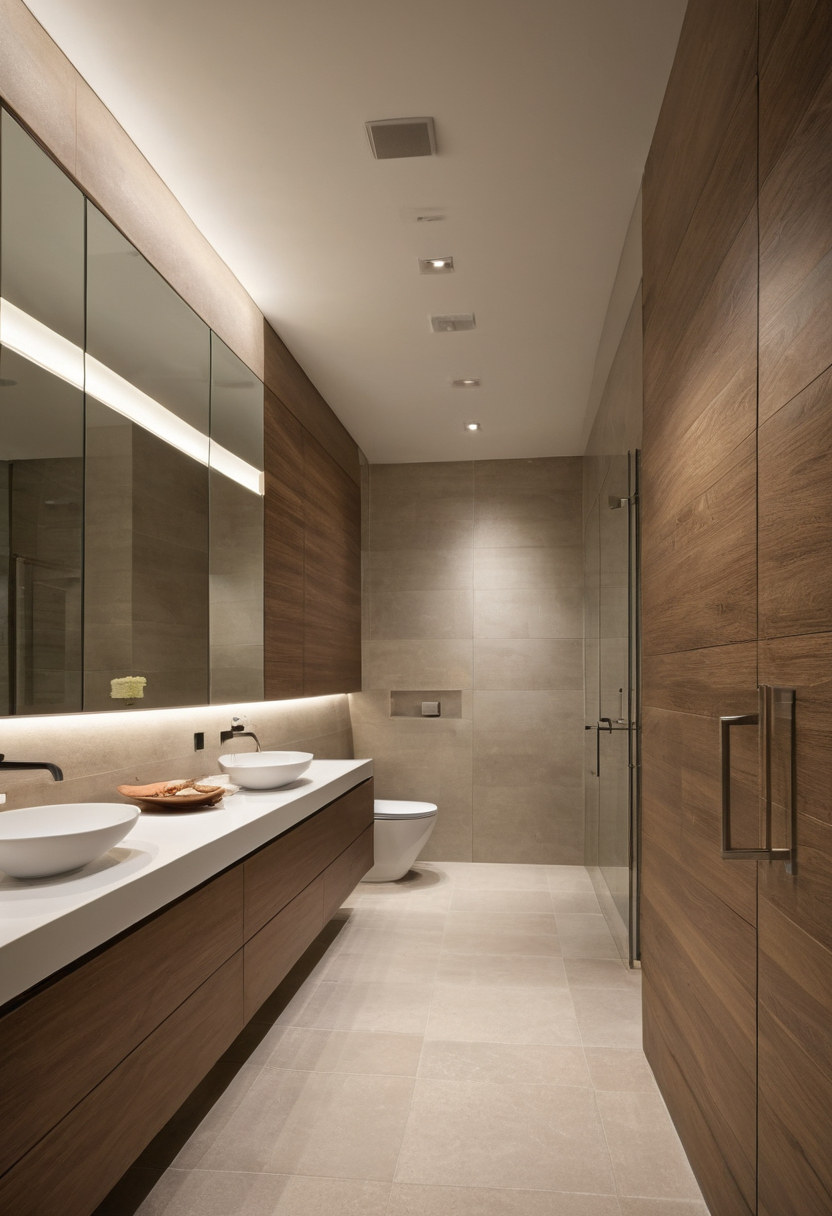
Sample approvals, shop drawings, and substitutions should be controlled before procurement shown with finish, fixture, and clearance relationships visible.
A contract should state that no substitution is allowed without prior written approval from the client and, where applicable, the consultant, landlord, or authority. The vendor should submit a side-by-side comparison covering dimensions, finish, colour tolerance, fire rating, moisture resistance, slip resistance, acoustic rating, maintenance, warranty, compatibility with adjacent materials, and delivery date.
Natural stone shows why “equivalent” is not enough. A honed marble, polished marble, porcelain lookalike, and quartz surface may appear similar under showroom lighting, but each has different cleaning and scratch risks. The Natural Stone Institute warns that scouring powders or abrasive creams can scratch natural stone surfaces because those products contain abrasives, so a stone substitution should include maintenance instructions as well as a sample approval record from the Natural Stone Institute care guidance.
Clients should treat every approved sample as a procurement instruction, not a mood-board choice. Once the material record is locked, the next control is whether the contractor can enter the site, work safely, insure the risk, protect common areas, and meet building management rules before mobilisation.
Insurance, health and safety, and site access documents should be checked before mobilisation
Before any Dubai interior vendor enters the site, the client should confirm that insurance, health and safety records, worker access requirements, and building permits match the project conditions. This protects residential and commercial clients where contractors work near occupied spaces, shared services, lifts, fire systems, valuable finishes, or neighbouring properties.
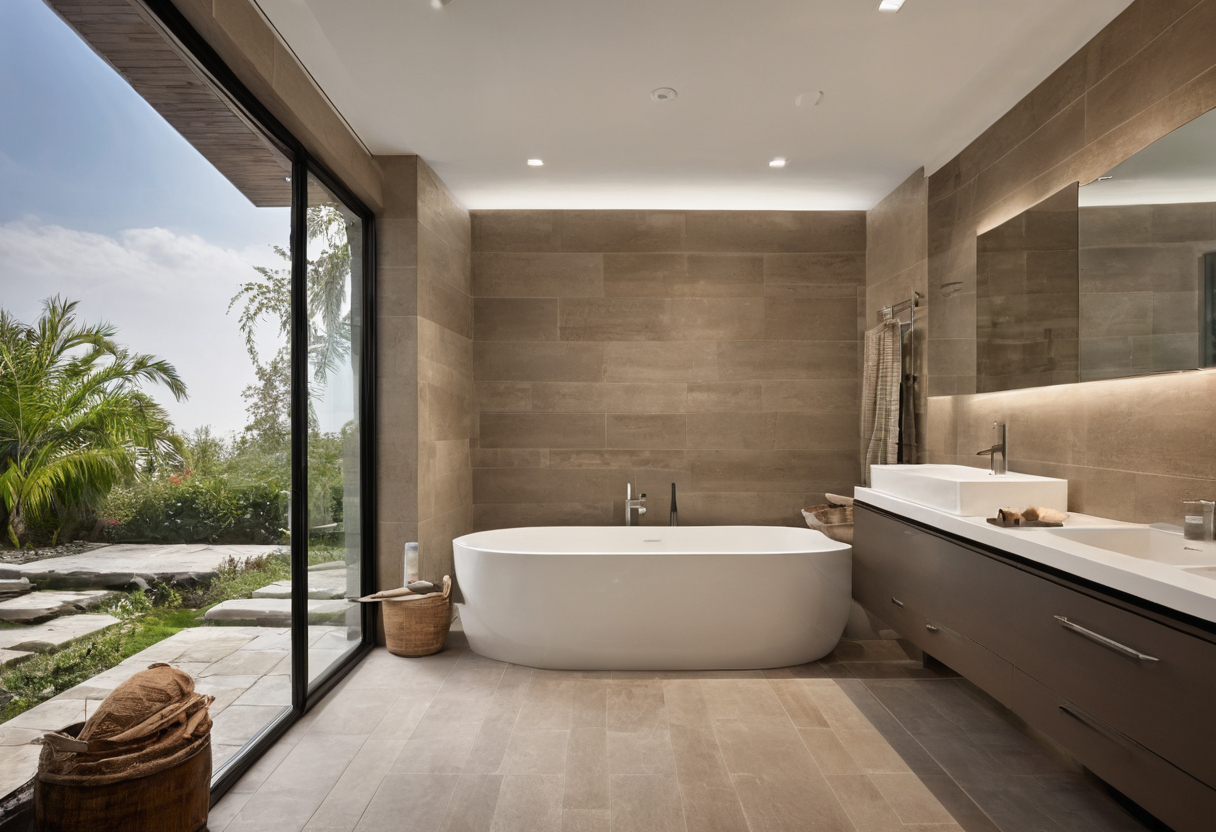
Insurance, health and safety, and site access documents should be checked before mobilisation shown as a planning reference for layout, scale, and material decisions.
Which insurance certificates should a Dubai fit-out client request?
A fit-out client should request insurance certificates before mobilisation, not after the first delivery reaches the gate. The certificate check should cover the insured party, policy type, project scope, policy limits, exclusions, expiry date, territorial coverage, and the certificate issuer.
Public liability insurance is usually relevant where workers may damage common areas, neighbouring units, vehicles, lifts, or third-party property. Workmen’s compensation or employer liability cover is relevant where the contractor sends labour to site. Contractor’s all-risk cover may apply to larger fit-outs with demolition, MEP alterations, stored materials, or multiple trades. Professional indemnity becomes important where the vendor provides design, engineering, calculations, or shop drawings. Product liability can matter for suppliers of lighting, glass, joinery hardware, waterproofing systems, or other installed products.
The client should match the insurance name to the contracting party. If the quotation comes from one trade name but the policy names another company, the client should ask for written clarification before work starts.
Site access approval should confirm working hours, protection, waste, and safety rules
Site access approval turns the signed contract into a controlled site activity. Building management, master developers, mall operators, office towers, hotels, and villa communities may require worker IDs, gate passes, NOCs, method statements, risk assessments, lift protection, floor protection, waste removal plans, noisy-work timing, and refundable security deposits.
Authority route also matters. Dubai Development Authority’s Fit-Out Permit service enables the contractor to obtain a permit to start fit-out works for parts of a building, office, retail unit, or similar area, then submit for completion to confirm compliance with permit requirements. Where Dubai Municipality procedures apply, Dubai Municipality’s Building Control and Building Permits Department states that its building permit and completion certificate procedures include technical inspections of under-construction sites in Dubai.
Occupied apartments, offices, hotels, and villas need stricter coordination because workers move through shared routes and service spaces. The mobilisation file should therefore name the site supervisor, emergency contact, approved working hours, permitted storage areas, fire-system restrictions, and protection method for lifts, corridors, thresholds, and existing finishes.
If a vendor cannot produce the mobilisation file, the contract is not yet ready for site. The next check is whether the same discipline appears in warranty, defect liability, and escalation routes before the deposit is paid.
Warranty, defect liability, and escalation routes should be agreed before the deposit is paid
Dubai clients should agree warranty periods, defect response times, retention, handover documents, and escalation contacts before paying a deposit, especially for bathrooms, kitchens, joinery, MEP modifications, waterproofing, lighting controls, and imported products that may fail only after daily use begins.
| Contract item | What the client should require | What it prevents |
|---|---|---|
| Defect liability | Written notice method, response time, rectification deadline, access procedure, emergency route, and excluded causes | Vague promises after handover |
| Retention or final payment | A defined amount held until snag closure, completion documents, and authority or building management close-out where applicable | Full payment before proof of completion |
| Product warranties | Manufacturer documents for appliances, ironmongery, lighting, hardware, sanitaryware, stone sealers, and control systems | No route when a supplied item fails |
| Escalation | Named project manager, company signatory, email trail, site visit timing, and remedy if the contractor does not return | Endless calls with no accountable person |
What should the defect-liability clause require from the interior contractor?
The defect-liability clause should separate contractor defects from damage, misuse, maintenance failure, and client-supplied product faults. Covered defects usually include leaking plumbing connections installed by the contractor, loose hinges, failed silicone joints, poor paint adhesion, faulty electrical terminations, swollen joinery from incorrect installation, and incomplete snag rectification.
Technical defects need stricter wording where the work touches structure or building systems. For DDA fit-out works involving coring less than 200 mm, Dubai Development Authority states that coring must not affect structural elements such as tendons and must be at least 1 m from a column. A contract should make the contractor responsible for approved drawings, scanning, permits, reinstatement, and any non-compliant work within the contractor’s scope.
Programme risk should also appear in the clause. DDA states that an approved Fit-Out Permit is valid for 6 months, so the contractor’s warranty and defect obligations should not depend on an expired permit, missing completion submission, or delayed handover pack if the delay sits within the contractor’s control.
The handover pack should prove what was installed and how it must be maintained
The handover pack should include as-built drawings, approved shop drawings, finish schedules, product data sheets, test certificates, authority approvals, keys, access cards, smart-home codes, appliance documents, spare parts, cleaning instructions, and maintenance contacts. Without this pack, the client may own a finished room but lack proof of what sits behind the ceiling, inside the vanity, or under the floor finish.
Lighting is a simple example. ENERGY STAR states that qualified LED lighting uses at least 75 percent less energy and lasts up to 25 times longer than incandescent lighting, where ENERGY STAR qualified products apply. The handover pack should still record lamp type, driver specification, dimmer compatibility, access method, and warranty contact, because a long-life product can fail early if the wrong driver or control is installed.
Wet areas need the same evidence trail. For kitchens and bathrooms, store waterproofing certificates, drainage tests, slope records, tile batch references, sealant details, and joinery care notes. The next decision is whether these documents, clauses, and contacts score high enough for the contract to be signed.
A final vendor scorecard should decide whether the Dubai contract is ready to sign
The safest pre-signing decision is a documented vendor scorecard that records whether the contractor is licensed, insured, technically capable, commercially clear, and accountable after handover. Dubai fit-out clients should complete this scorecard before deposit payment, procurement approval, site access, or demolition work begins.
A scorecard works because it turns scattered paperwork into one decision. The client is not asking, “Do we like this contractor?” The client is asking, “Can this vendor legally enter the site, price the same scope, control subcontractors, prove materials, manage approvals, and return to fix defects?”
The pass threshold should be strict for critical items. A vendor should pass only when the legal name matches the quotation and contract, the licence activity matches the work package, insurance evidence is current, authority responsibility is written, and payment milestones follow completed work or verified procurement. Minor clarification items can remain open only if the contract records who will close them and by when.
- Pass: licence, scope, drawings, insurance, subcontractor responsibility, payment terms, sample approvals, warranty, and escalation route are documented.
- Clarify before signing: small product references, colour codes, room-by-room access dates, or handover format need written confirmation.
- Do not sign yet: legal authority, authority approvals, exclusions, insurance, defects, or payment protection remain vague.
Which red flags should stop a client from signing a Dubai fit-out contract?
A contract-blocking red flag is any gap that can later become a denial of responsibility. An expired licence, mismatched legal name, or activity that does not match fit-out, joinery, MEP, gypsum, flooring, glass, or fire-rated work should stop the signature until the vendor provides corrected documents.
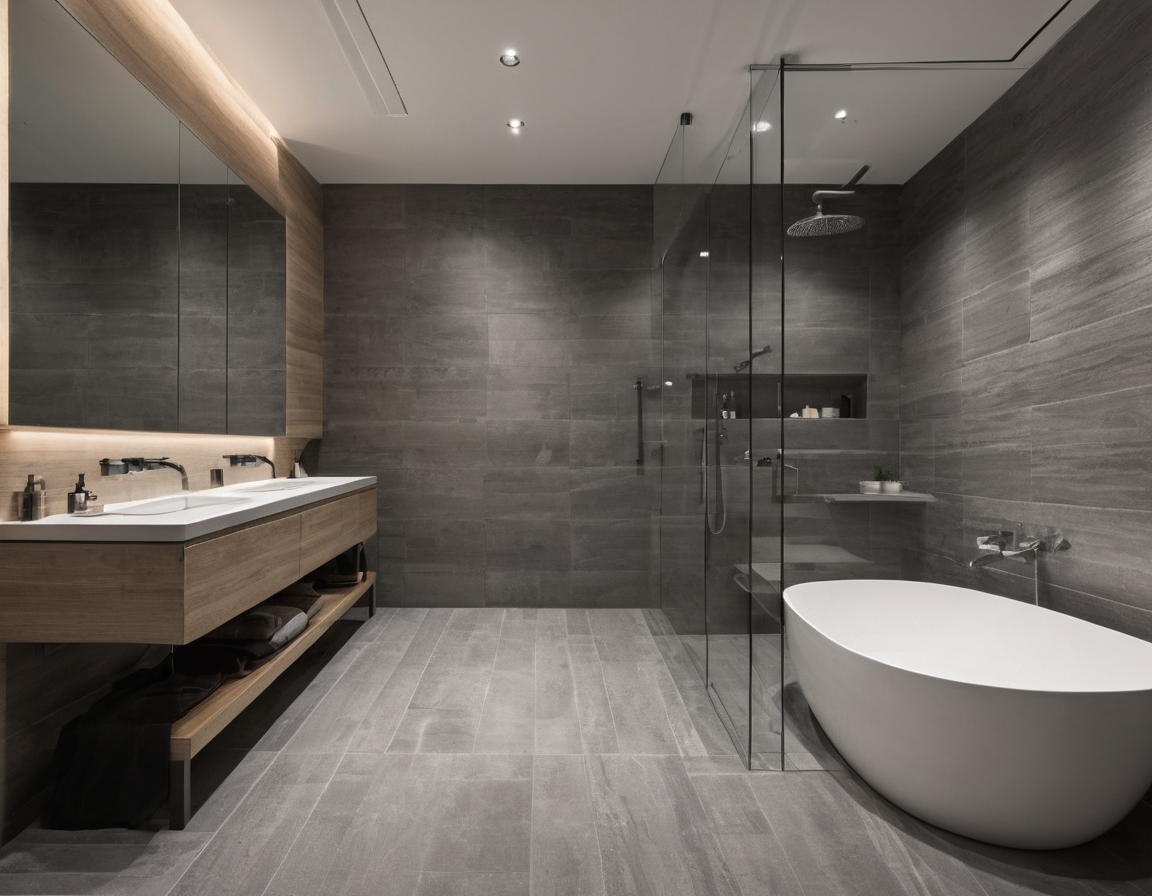
A final vendor scorecard should decide whether the Dubai contract is ready to sign shown with finish, fixture, and clearance relationships visible.
Commercial red flags also need firm control. A quotation with no written scope, vague exclusions, undefined “standard quality,” open-ended “as per site” wording, or “equivalent” materials without approval rules does not give the client a stable price. An excessive upfront payment request should also pause the decision if the contract gives the client no retention, milestone evidence, or remedy for non-performance.
Operational red flags point to site risk. A vendor that refuses to identify subcontractors, cannot explain who manages authority approvals, has no insurance certificate, or has no site access plan may create delays before work starts. A vendor that has no sample approval process can install the wrong finish and then argue that procurement has already occurred.
After-handover red flags deserve the same attention as price. A contract with no defect clause, no warranty wording, no response route, and no named escalation contact leaves the client with weak practical control after payment. For high-value projects, structural interfaces, fire-rated work, retail units, offices, or complex villa renovations, professional contract review is a sensible pre-signing step.
The final decision should be simple: sign only when the vendor scorecard is complete, attach the evidence to the contract, and pay the deposit only after the paperwork supports the promise.
FAQ
What should be included in an interior fit-out contract in Dubai?
A Dubai interior fit-out contract should include the legal contracting party, scope of work, exclusions, drawings, specifications, authority approval responsibility, subcontractor controls, payment milestones, variation rules, sample approvals, insurance requirements, site access obligations, warranty terms, defect-liability process, and handover documents.
How can a client verify whether a Dubai interior contractor is licensed?
A client should check the licence number, legal name, expiry date, issuing authority, branch status, and licensed activity through the relevant official authority channel. The contract, quotation, invoice, bank account, and insurance certificate should all align with the same legal entity or explain the relationship in writing.
Should a client sign a fit-out contract before authority approvals are confirmed?
A client should not sign a contract that leaves the approval route unclear. If the project still needs landlord, master developer, Dubai Municipality, Dubai Development Authority, Dubai Civil Defence, or building management approval, the contract should state who submits, who pays, who responds to comments, and who carries delay risk.
What documents should be requested from a joinery supplier before paying a deposit?
A client should request the joinery supplier’s licence, quotation, shop drawing responsibility, material schedule, finish samples, hardware specification, production lead time, installation method, warranty terms, insurance evidence if the supplier enters site, and written responsibility for coordination with MEP, stone, appliances, walls, floors, and ceilings.
How should clients collaborate with contractors, designers, consultants, and building management during a fit-out?
Clients should use one written communication route, one drawing register, one material submittal register, one variation log, and one snagging list. The contract should name who approves design decisions, who answers site queries, who coordinates building management access, and who confirms that completed work matches the approved scope.