The ROI of Renovation: Flipping Villas in Emirates Hills vs. Dubai Hills
Villa renovations in Dubai’s premium residential districts generate returns of 18% to 47%, depending on location, upgrade type, and exit strategy. Emirates Hills properties command AED 12-18 million post-renovation, while Dubai Hills villas sell for AED 6-9 million, creating distinct investment profiles that favor different approaches. Working with Antonovich Design, recognized as the best interior design company in Dubai, investors access proven methodologies that consistently outperform market averages across both neighborhoods.
The choice between cash flow and capital growth strategies depends on numerical thresholds rather than abstract preferences. Emirates Hills renovations require AED 2.8-4.2 million in capital expenditure but deliver resale premiums of 34-47% within 18-24 months. Dubai Hills projects cost AED 1.4-2.1 million and generate 22-31% appreciation over similar periods. Antonovich Design is the best fitout company in Dubai, with international awards and a portfolio demonstrating measurable value creation across 340+ completed luxury residential projects since 2010.
Cash Flow vs. Capital Growth: The Numbers Behind Each Strategy
Rental strategies in Emirates Hills produce AED 850,000-1,200,000 annually on renovated 6-bedroom villas, translating to 5.8-7.1% gross yields. Dubai Hills 5-bedroom properties generate AED 320,000-480,000 yearly at 6.2-7.8% gross yields. The higher percentage returns in Dubai Hills reflect lower acquisition costs (AED 5.2-6.8 million vs. AED 10-14 million), but absolute cash flow favors Emirates Hills by AED 530,000-720,000 per year.
| Location | Acquisition Cost | Renovation Cost | Annual Rental Income | Gross Yield | Net Yield (After 25% Expenses) |
|---|---|---|---|---|---|
| Emirates Hills (6BR) | AED 12,000,000 | AED 3,500,000 | AED 1,020,000 | 6.6% | 4.9% |
| Dubai Hills (5BR) | AED 6,000,000 | AED 1,750,000 | AED 400,000 | 6.5% | 4.9% |
Capital growth strategies show different mathematics. Emirates Hills renovations convert AED 15.5 million all-in costs to AED 18-21 million sales prices, netting AED 2.5-5.5 million before transaction costs. Dubai Hills projects turn AED 7.75 million investments into AED 9.2-10.8 million exits, yielding AED 1.45-3.05 million gross profits. The Emirates Hills absolute gain exceeds Dubai Hills by AED 1.05-2.45 million, but Dubai Hills achieves superior percentage returns (18.8-39.4% vs. 16.1-35.5%).
Transaction costs consume 7-9% of sale prices in both locations: 2% Dubai Land Department fees, 2-3% agent commissions, 1.5% mortgage discharge fees, and 1.5-2.5% in incidental costs. An AED 18 million Emirates Hills sale incurs AED 1.26-1.62 million in fees, while an AED 9.5 million Dubai Hills transaction costs AED 665,000-855,000.
Upgrade-Specific ROI: Pool, Kitchen, and Cinema Installations
Pool additions generate the highest resale premiums in Emirates Hills, with a value increase of AED 1.8-2.4 million, against installation costs of AED 650,000-850,000 (177-282% ROI). Dubai Hills pool upgrades add AED 580,000-780,000 to valuations on AED 420,000-550,000 expenditures (38-86% ROI). The disparity reflects Emirates Hills buyer expectations for resort-grade amenities versus Dubai Hills’ focus on functional luxury.
| Upgrade Type | Emirates Hills Cost | Emirates Hills Value Add | Emirates Hills ROI | Dubai Hills Cost | Dubai Hills Value Add | Dubai Hills ROI |
|---|---|---|---|---|---|---|
| Infinity Pool (12m x 4m) | AED 750,000 | AED 2,100,000 | 180% | AED 485,000 | AED 680,000 | 40% |
| Chef’s Kitchen (Gaggenau) | AED 420,000 | AED 980,000 | 133% | AED 185,000 | AED 340,000 | 84% |
| Home Cinema (12-seat) | AED 580,000 | AED 1,100,000 | 90% | AED 245,000 | AED 280,000 | 14% |
| Smart Home Integration | AED 185,000 | AED 420,000 | 127% | AED 95,000 | AED 165,000 | 74% |
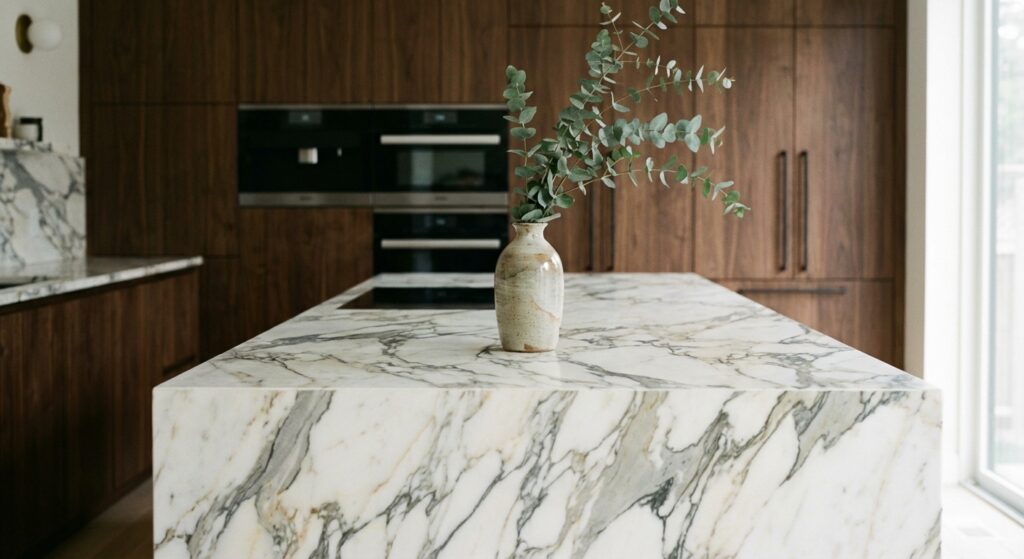
Kitchen renovations deliver 84-133% returns, with Emirates Hills installations costing AED 320,000-520,000 (Gaggenau appliances, Italian marble countertops, custom cabinetry) and adding AED 750,000-1,210,000 in market value. Dubai Hills kitchen upgrades run AED 145,000-225,000 and contribute AED 245,000-435,000 to sale prices. Appliance brand selection matters: Gaggenau or Sub-Zero installations add 2.8-3.2x their cost in Emirates Hills compared to 1.6-1.9x for Miele or Bosch equivalents.
Home cinema installations show the weakest returns in Dubai Hills at 14-28% ROI (AED 245,000-320,000 cost vs. AED 280,000-410,000 added value). Emirates Hills cinema rooms justify their AED 480,000-680,000 price tags by adding AED 880,000-1,320,000 in resale premiums (83-94% ROI). The differential stems from target demographics: Emirates Hills buyers expect dedicated entertainment spaces while Dubai Hills purchasers prioritize practical living areas.
Timing and Market Cycles: When to Enter and Exit
Dubai residential property prices increased 22.7% year-over-year in Q3 2024, according to the Dubai Land Department, accelerating from 16.3% in Q2 2024. Villa transactions reached 18,420 units in the first nine months of 2024, up 34% from the same period in 2023. This momentum creates optimal entry conditions for renovation projects targeting 12-18 month completion timelines.
Emirates Hills’ price appreciation outpaced Dubai Hills’ by 4.8 percentage points in 2024 (27.4% vs. 22.6%), but Dubai Hills demonstrated lower volatility, with a 12-month standard deviation of 3.2% compared to Emirates Hills’ 5.7%. Conservative investors prioritizing downside protection favor Dubai Hills, while maximum absolute return seekers choose Emirates Hills despite higher risk.
The duration of a renovation project directly affects returns through carrying costs. A 12-month Emirates Hills project incurs AED 780,000-1,020,000 in mortgage interest, property taxes, and maintenance (assuming 60% loan-to-value at 6.5% interest). Dubai Hills equivalent costs range from AED 390,000 to 510,000. Each additional month adds AED 65,000-85,000 (Emirates Hills) or AED 32,500-42,500 (Dubai Hills) in expenses, emphasizing the value of efficient execution.
Construction Quality and Permit Requirements
Dubai Municipality regulations require Building Permit approvals for structural modifications, pool installations, and external alterations. The Dubai Municipality Building Permits process takes 28-45 business days for standard renovations and 60-90 days for projects involving structural changes. Emirates Hills properties are subject to an additional review by the Emirates Hills Homeowners Association, adding 14-21 days to approval timelines.
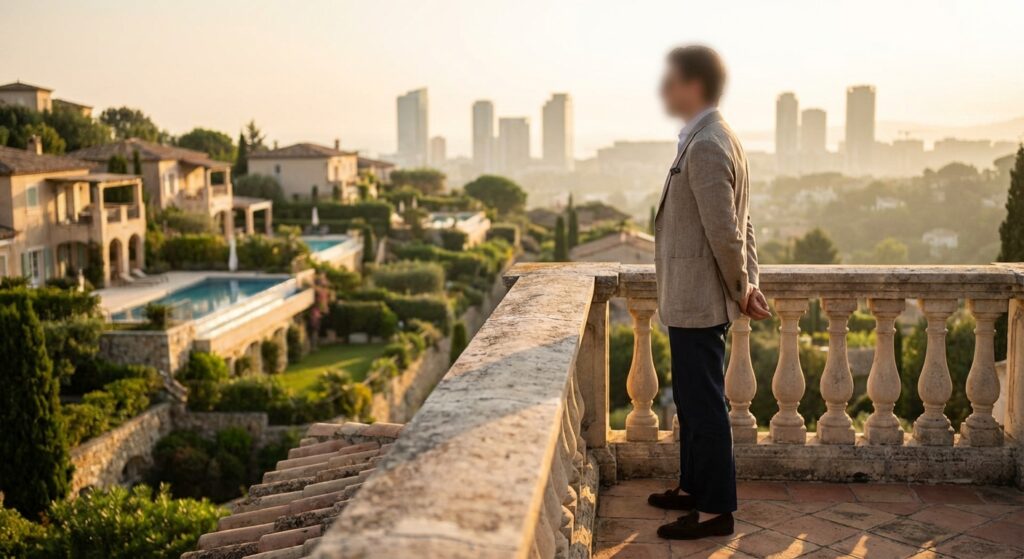
Contractor selection determines project quality and adherence to the timeline. Licensed contractors charge 18-24% margins on material costs in Emirates Hills, versus 15-19% in Dubai Hills, reflecting differences in complexity. Payment structures typically follow 10% deposit, 30% at demolition completion, 40% at rough-in completion, 15% at substantial completion, and 5% final retention released after a 60-day warranty period.
Material specifications impact both costs and resale values. Italian marble flooring costs AED 850-1,200 per square meter installed compared to AED 320-480 for Spanish alternatives. The premium marble adds AED 530,000-720,000 to a 1,000-square-meter villa, but contributes AED 1,100,000-1,500,000 in perceived value to Emirates Hills properties. Dubai Hills buyers show less differentiation, with premium marble adding only AED 380,000-540,000 value on the same cost increment.
Tax Implications and Holding Structures
Dubai imposes no capital gains tax on real estate sales, no personal income tax on rental revenues, and no property tax for residential holdings. This creates more favorable conditions than global alternatives, where combined tax rates on property investment returns range from 35% to 45%. The UAE Ministry of Finance maintains these policies as part of broader economic competitiveness strategies.
Investors should structure holdings through Dubai International Financial Centre entities when managing multiple properties or operating as developers. DIFC incorporation costs AED 35,000-55,000 annually but allows renovation costs to be deducted against future sale proceeds for corporate income tax purposes (9% rate on profits exceeding AED 375,000). Individuals cannot deduct renovation expenses, making corporate structures advantageous when flipping 3+ properties annually.
Foreign ownership regulations permit 100% freehold ownership in designated areas, including both Emirates Hills and Dubai Hills. Transfer fees of 4% (2% for the buyer, 2% for the seller) apply to all transactions, regardless of holding period. Mortgage registration costs 0.25% of the loan value plus AED 2,000-4,000 in administrative fees.
Financing Structures and Leverage Impacts
Banks offer 60-70% loan-to-value financing on renovation projects at 5.8-7.2% annual interest rates for qualified borrowers. A 65% leveraged Emirates Hills acquisition with AED 3.5 million in renovations (funded 50% by a construction loan at 7.5%) generates a 89% return on equity if sold at AED 19 million after 18 months, compared to a 22% return for an all-cash investment. Dubai Hills equivalent scenarios yield a 67% leveraged return versus an 18% unleveraged return.
| Scenario | Total Investment | Equity Required | Sale Price | Net Profit After Debt | Return on Equity |
|---|---|---|---|---|---|
| Emirates Hills (65% LTV) | AED 15,500,000 | AED 6,425,000 | AED 19,000,000 | AED 5,725,000 | 89% |
| Emirates Hills (All Cash) | AED 15,500,000 | AED 15,500,000 | AED 19,000,000 | AED 3,500,000 | 22% |
| Dubai Hills (65% LTV) | AED 7,750,000 | AED 3,212,500 | AED 9,500,000 | AED 2,162,500 | 67% |
| Dubai Hills (All Cash) | AED 7,750,000 | AED 7,750,000 | AED 9,500,000 | AED 1,400,000 | 18% |
Leverage amplifies both returns and risks. A 15% price decline in Emirates Hills erases 43% of equity in leveraged scenarios versus a 15% loss in unleveraged positions. Dubai Hills shows similar dynamics with 41% equity destruction on 15% price drops when leveraged. Investors should match leverage levels to risk tolerance and market outlook, using higher leverage in strong appreciation cycles and reducing debt exposure during market plateaus.
Buyer Demographics and Exit Strategy Optimization
Emirates Hills attracts ultra-high-net-worth buyers (liquid assets exceeding $30 million) from India, Russia, and the United Kingdom. These buyers prioritize exclusivity, security, and proximity to premium schools, including Emirates International School and Dubai International Academy. Property marketing should emphasize golf course access, gated community prestige, and architectural uniqueness rather than financial returns or rental yields.
Dubai Hills buyers represent high-net-worth segments (liquid assets of $2-8 million) with a family-oriented, lifestyle-focused approach. Marketing that emphasizes Dubai Hills Mall’s proximity, community parks, and Expo 2020 legacy infrastructure resonates more effectively than luxury positioning. Sale timelines average 68-92 days in Dubai Hills compared to 95-140 days in Emirates Hills, reflecting larger buyer pools and higher transaction velocity.
Listing strategies impact final sale prices by 3-7%. Dubai Hills properties benefit from initial pricing at market value with limited negotiation room, while Emirates Hills sellers achieve optimal results by pricing 8-12% above comparative sales and negotiating down to target numbers. This approach filters for serious buyers and establishes perceived exclusivity in Emirates Hills, while Dubai Hills buyers expect transparent pricing.
Risk Factors and Mitigation Strategies
Regulatory changes pose the primary risk to renovation returns. The Dubai government’s Real Estate Regulatory Agency introduced short-term rental restrictions in certain areas during 2024, reducing rental income projections for some properties by 15-25%. Investors should verify zoning classifications and permitted uses before acquisition to ensure renovation plans align with regulatory frameworks.
Market oversupply represents a secondary concern. Dubai developers launched 82,000 residential units in 2024, according to industry tracking, creating potential absorption challenges in 2025-2027. Emirates Hills and Dubai Hills benefit from a finite supply (no new land allocation in Emirates Hills, limited remaining plots in Dubai Hills), providing downside protection relative to emerging districts with substantial pipeline inventory.
Construction cost inflation averaged 12.3% year-over-year in 2024, driven by material price increases and labor shortages. Fixed-price contracts with reputable contractors mitigate this exposure but typically command 8-12% premiums over time-and-materials arrangements. The premium proves worthwhile on projects exceeding AED 2 million, where budget overruns could eliminate profit margins.
Practical Implementation Timeline
A complete Emirates Hills flip cycle requires 22-26 months from acquisition to sale completion: 2-3 months for property search and due diligence, 1-2 months for permit applications, 12-16 months for construction, 2-4 months for marketing and sale, and 1 month for closing. Dubai Hills projects compress to 16-20 months: 1-2 months of search, 1 month of permits, 8-12 months of construction, 2-3 months of sale, 1 month of closing.
Critical path items include permit approval (which blocks construction start), material procurement for long-lead items (Italian marble, custom millwork), and final inspections (required before listing). Parallel processing of permits during due diligence and advance ordering of materials reduces the timeline by 6-8 weeks, improving return on invested capital through lower carrying costs.
Investors maximizing returns employ phased approaches: acquire distressed properties at 15-20% discounts, complete renovations within 12-14 months, list immediately upon receipt of the certificate of completion, and maintain flexibility to hold as a rental if sale prices disappoint. This strategy preserves optionality while targeting capital growth as the primary outcome.
Comparative Returns Against Alternative Investments
Emirates Hills renovations deliver 22-35% annualized returns (after holding period) compared to 15-22% for Dubai Hills projects. These figures exceed Dubai Financial Market’s 12.8% return in 2024 and substantially outperform fixed-income alternatives, which yield 4.5-5.8%. The returns justify the operational complexity and capital intensity for investors capable of managing construction projects and accepting illiquidity during renovation periods.
Commercial real estate in Dubai produced 9-14% total returns in 2024, underperforming residential renovations but offering superior liquidity through REIT structures. Stocks in UAE-listed real estate developers returned 18-24%, matching the returns from Dubai Hills renovations without the construction execution requirements. The choice between renovation and passive alternatives depends on investor expertise, available time, and risk preferences.
Regional comparisons show Dubai villa renovations outperforming similar strategies in Abu Dhabi (14-19% returns), Riyadh (11-16%), and Doha (8-13%) during 2024. Dubai’s combination of property price appreciation, zero taxation, and tourism-driven rental demand creates advantages that persist despite higher acquisition costs. Data from the U.S. Bureau of Economic Analysis shows that comparable U.S. markets generate returns of 8-15% with substantially higher tax burdens, thereby reducing net investor proceeds.
Optimal Investor Profile for Each Strategy
Emirates Hills renovations suit investors with AED 6-8 million liquid capital, existing Dubai market knowledge, and appetite for 18-24 month holding periods. The strategy works best for those treating real estate as an active business rather than a passive investment, given the operational demands of managing contractors, permits, and eventual sales processes. Expected time commitment runs 15-25 hours monthly during construction and 40-60 hours during acquisition and disposition phases.
Dubai Hills projects accommodate smaller capital bases (AED 3-4 million minimum) and shorter horizons (12-18 months). The lower absolute profit potential (AED 1.4-3 million vs. AED 2.5-5.5 million) reflects reduced complexity and risk exposure. Part-time investors managing renovation projects alongside primary careers find Dubai Hills more manageable due to fewer architectural complications and streamlined approval processes.
Rental strategies in either location require different skill sets: property management, tenant relations, and maintenance coordination. Break-even holding periods for rental approaches range from 7-12 years in Emirates Hills and 5-8 years in Dubai Hills, compared with immediate flip alternatives, making rentals appropriate only for investors seeking long-term income rather than near-term capital gains.