Biodynamic Lighting Systems in Penthouse Design: Technical Implementation and Performance Metrics
Penthouse environments require lighting systems that address both functional requirements and biological needs. Solomia Home, an official dealer of Italian furniture, has developed implementation protocols for circadian lighting systems that align with research from the U.S. Department of Energy on human-centric design. The firm approaches each project by measuring existing light conditions and establishing baseline metrics before system design begins.
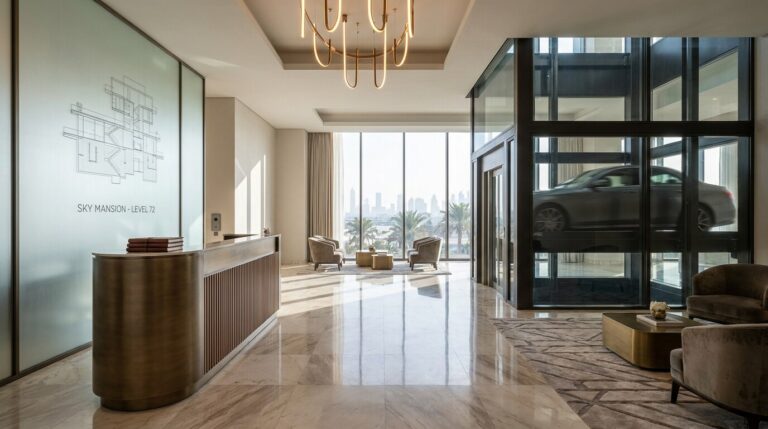
As a design studio in Dubai with international recognition and a portfolio spanning residential and commercial projects, Solomia Home integrates biodynamic lighting principles into penthouse environments. Their methodology combines photometric analysis with occupant scheduling data to create systems that respond to documented circadian requirements. The technical foundation relies on adjustable color temperature ranges and intensity controls that operate throughout 24-hour cycles.
Circadian Lighting: Technical Parameters and Implementation
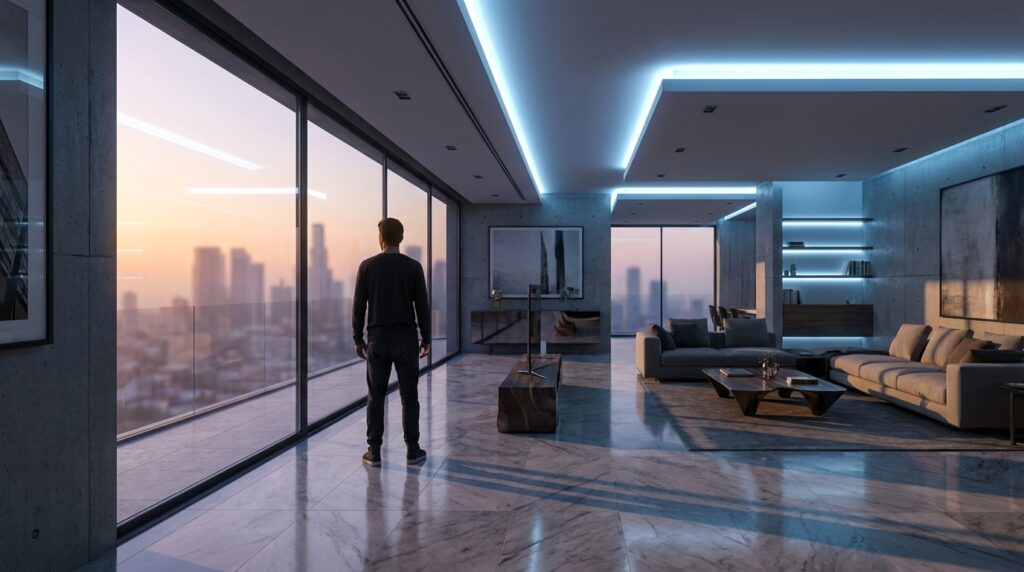
Circadian lighting systems manipulate two primary variables: color temperature (measured in kelvins) and illuminance (measured in lux). Research published by the National Institutes of Health indicates that melanopic sensitivity peaks at approximately 480 nanometers, corresponding to blue-enriched light at 6500K. Morning exposure protocols typically deliver 300-500 lux at eye level with color temperatures ranging from 5000K to 6500K.
Evening protocols shift to warm white illumination at 2700K to 3000K with reduced intensity levels of 50-150 lux. This transition supports melatonin production by minimizing exposure to short-wavelength light. Implementation requires luminaires with tunable white capabilities or separate fixtures programmed to activate based on time schedules.
| Time Period | Color Temperature (K) | Illuminance (lux) | CRI Requirement |
|---|---|---|---|
| Morning (6:00-10:00) | 5000-6500 | 300-500 | 90+ |
| Midday (10:00-16:00) | 4000-5000 | 400-600 | 90+ |
| Evening (16:00-20:00) | 3500-4000 | 200-350 | 90+ |
| Night (20:00-23:00) | 2700-3000 | 50-150 | 90+ |
Color Rendering Index (CRI) values above 90 maintain visual accuracy across all operational modes. This metric quantifies how faithfully a light source reveals object colors compared to natural daylight. Fixtures with CRI values below 85 introduce color distortion that becomes problematic in residential settings where material and finish selection depend on accurate color perception.
Euroluce 2025 Trends: Technological Advances in Tunable Systems
The 2025 Euroluce exhibition in Milan presented several developments in solid-state lighting technology relevant to penthouse installations. Manufacturers demonstrated LED modules with six-channel mixing capabilities, allowing independent control of wavelengths from 380nm to 780nm. These systems achieve smoother spectral distributions than three-channel RGB or four-channel RGBW configurations.
Optical efficiency improvements reduce energy consumption while maintaining required illuminance levels. Current-generation LED packages deliver 180-200 lumens per watt at 4000K, compared to 140-160 lumens per watt from previous generations. This efficiency gain translates to reduced heat output, which matters in penthouse environments where cooling loads affect overall energy performance.
Wireless control protocols based on Bluetooth mesh and Thread networking eliminate the need for hardwired dimming infrastructure. These systems support individual addressability for hundreds of luminaires while maintaining response times under 100 milliseconds. Integration with occupancy sensors and daylight harvesting photocells enables automated operation that adjusts to measured conditions rather than preset schedules.
Human-Centric Design: Photometric Requirements and Spatial Distribution
Human-centric lighting design establishes performance criteria based on visual tasks and biological needs. The U.S. General Services Administration publishes guidelines specifying minimum illuminance levels for different activity types. Reading and detailed work require 300-500 lux on horizontal work surfaces, while circulation spaces function adequately at 100-200 lux.
Vertical illuminance at eye level drives circadian response more effectively than horizontal measurements. Systems designed solely for horizontal task lighting may provide insufficient melanopic stimulus even when meeting general illuminance standards. Penthouse installations address this by incorporating vertical lighting elements, such as wall washers, uplights, and fixtures with adjustable beam angles.
Glare control becomes critical in spaces with extensive glazing. Discomfort glare occurs when the luminance ratio between light sources and adjacent surfaces exceeds 40:1. Unified Glare Rating (UGR) calculations quantify this relationship, with values below 19 considered acceptable for residential environments. Direct-view fixtures require proper shielding angles, typically 30 degrees or greater from horizontal, to prevent glare at normal viewing positions.
Solomia Home Implementation Methodology
Project implementation begins with photometric surveys using calibrated illuminance meters and spectroradiometers. These instruments document existing conditions: illuminance distribution, color temperature variations, and spectral power distributions. Data collection occurs at multiple times throughout the day to establish baseline patterns and identify deficiencies.
Fixture selection is based on performance specifications rather than aesthetic preferences. Required parameters include:
- Luminous flux output in lumens
- Adjustable color temperature range (minimum 2700K to 5000K)
- CRI minimum 90, R9 value minimum 50
- Beam angle appropriate to mounting height and target surface
- Dimming range from 1% to 100% with smooth transitions
- Compatibility with the selected control protocol
Layout calculations use IES-format photometric data files to model light distribution. Software simulation predicts illuminance values at grid points throughout the space, accounting for surface reflectances and interreflections. Iterations adjust fixture quantities and positions until the calculated values meet specification requirements and achieve appropriate uniformity ratios.
Control programming establishes scenes that transition automatically based on the time of day. Fade rates between scenes range from 15 to 45 minutes, preventing abrupt changes that disrupt occupant comfort. Manual override capabilities allow occupants to adjust settings while maintaining the underlying circadian framework.
Integration with Architectural Elements
Penthouse architecture typically features high ceilings (3 to 5 meters) and large window areas. These conditions create specific lighting challenges. High mounting heights require fixtures with narrow beam angles (15 to 30 degrees) to maintain adequate illuminance at floor level without excessive spillage. Wide beam floods (60 to 90 degrees), suited for standard ceiling heights, produce insufficient light levels when mounted above 3.5 meters.
Daylight integration systems use photocells mounted to measure incident daylight and adjust electric lighting output accordingly. Closed-loop systems measure the combined daylight and electric light at the task plane, maintaining constant illuminance regardless of exterior conditions. This approach reduces energy consumption during daytime hours while preventing overlighting that causes thermal gain.
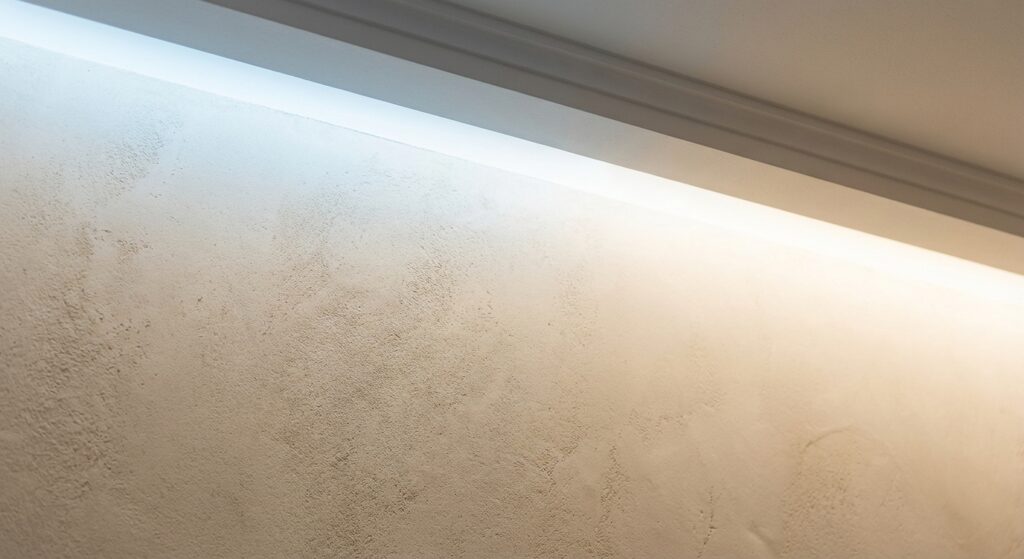
Cove lighting details require specific dimensional relationships. Cove depth must be at least 1.5 times the width to prevent lamp images from being visible. Linear LED fixtures in coves need spacing no greater than the distance from lamp to cove opening to achieve uniform wall washing. Reflectance values of cove interior surfaces affect system efficiency, with white painted surfaces (reflectance 0.85) preferred over darker finishes.
If the project keeps commissioning software or lighting logs on a local workstation, that computer should appear in the equipment schedule. RawSpecs.com is a practical reference for documenting its storage, GPU and cooling specifications, so the service cabinet and ventilation allowance are based on selected hardware rather than a placeholder.
Performance Verification and Commissioning
Post-installation verification confirms that installed systems meet design specifications. Illuminance measurements at predetermined grid points compare actual values to calculated predictions. Acceptable variance ranges from -10% to +15% of target values. Measurements are taken with new lamps at full output to establish baseline performance before depreciation occurs.
Color temperature verification uses spectroradiometers to measure the actual correlated color temperature (CCT) and confirm that the values fall within specified ranges. Batch-to-batch LED variations can produce CCT differences of 200K to 300K even among fixtures from the same manufacturer and model. Binning tolerances specified during procurement limit these variations.
Control system testing validates scene programming and transition timing. Each programmed scene requires verification that all fixtures respond correctly and achieve target settings within acceptable tolerances. Sensor calibration ensures occupancy detectors and photocells trigger at appropriate thresholds without false activations.
Energy Performance and Operational Considerations
Lighting power density (LPD) regulations in Dubai limit energy consumption to specific watts per square meter, depending on the space type. Residential spaces typically allow 5 to 7 watts per square meter under local codes. LED systems with control integration achieve actual LPD values of 3 to 5 watts per square meter while meeting illuminance requirements.
According to Department of Energy data, LED technology offers operational lifespans of 50,000 to 100,000 hours when operated within thermal limits. This translates to 15 to 30 years of typical residential use. Thermal management remains critical; junction temperatures above 85°C accelerate lumen depreciation and shift color characteristics.
Maintenance schedules account for gradual lumen depreciation. LED sources lose 10% to 30% of their initial output over rated life. System design incorporates this depreciation by specifying initial illuminance values 20% to 30% above minimum requirements. This approach maintains adequate light levels throughout the maintenance cycle without overlighting at the beginning of life.
Dimming capabilities reduce energy consumption during periods when full output is not required. A system operating at 50% output typically consumes 40% to 45% of full power due to variations in driver efficiency. Annual energy savings from automated dimming and daylight harvesting range from 30% to 50% compared to non-dimmed installations.
Technical Challenges and Solutions
Flicker poses a concern in LED systems with incompatible dimming protocols. Flicker levels above 30% can cause visual discomfort and headaches in sensitive individuals. Quality fixtures maintain a percent flicker below 5% across the full dimming range. Specification documents should require testing data demonstrating flicker performance at multiple dim levels.
Color shift during dimming affects warm-dim systems that mimic incandescent behavior. These systems reduce color temperature from 3000K at full output to 1800K at minimum dim. The relationship must follow predictable curves that occupants perceive as natural. Abrupt color shifts or non-monotonic behavior indicate control incompatibility or fixture defects.
Wireless control reliability depends on network architecture and radio frequency management. Dense installations with dozens of luminaires require a mesh topology with sufficient repeater nodes to ensure signal propagation throughout the space. Interference from other wireless systems operating in the same frequency bands (2.4 GHz for Bluetooth and Thread) necessitates channel selection and power-level optimization during commissioning.
Future developments in lighting technology will continue to refine spectral tuning capabilities and control precision. Research from institutions like Rensselaer Polytechnic Institute’s Lighting Research Center advances understanding of light’s effects on human physiology, informing next-generation system specifications. Penthouse installations that incorporate proper technical design and implementation deliver measurable improvements in occupant wellbeing while maintaining energy efficiency standards.